Light and colours
The stained-glass windows of Notre Dame: from creation to conservation
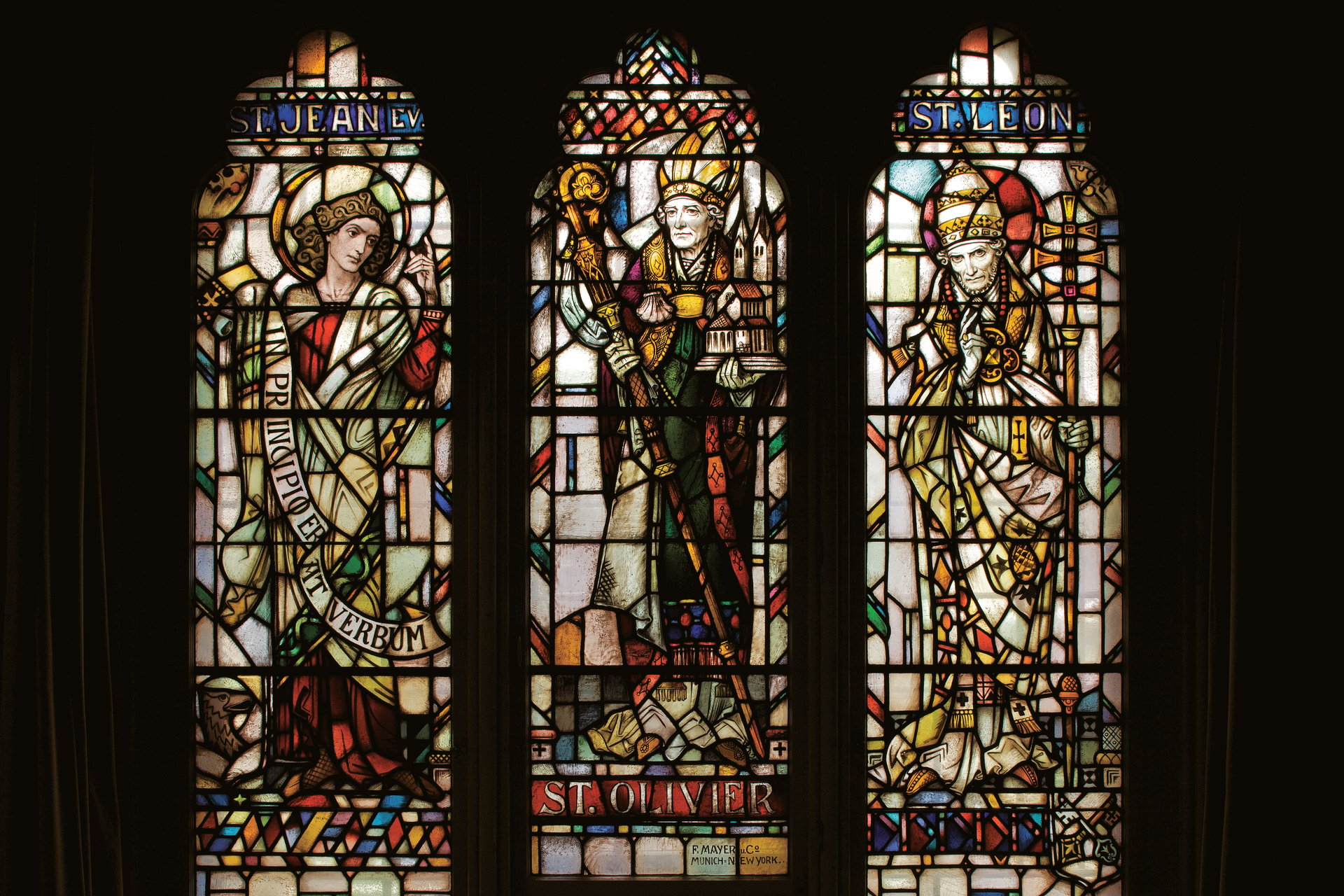
The magnificent stained- glass windows of Montreal’s Notre-Dame Basilica are much more than decorations: they are true works of art, created with patience and skill, each telling a story and illuminating the interior of the church with polychromatic light. How were they made? And how must they be maintained in order to preserve their beauty and strength over time?
Glass comes first
The creation of stained-glass windows begins with the glass itself. Artisans blow and colour the glass by hand, adding metal oxides to achieve rich and varied hues ranging from deep red and bright blue to green and gold as well. Each piece of glass is then cut according to a precise design, often inspired by a religious or historical theme.
These pieces are then assembled like a jigsaw puzzle, which is held together by lead rods that form the visible network on stained-glass windows. To secure the assembly permanently, the joints are soldered, and a special sealant is used to make the window watertight.
The impacts of the elements
These stained-glass windows must be able to withstand the wear and tear of time. Sunlight, which is so beautiful when shining through the glass, gradually causes changes that weaken the lead. Wind, rain, and temperature variations also put pressure on the entire structure. As a result, restoration eventually becomes essential in order to preserve the work.
Specialists in this field clean stained-glass windows with mild, non-abrasive products in order to avoid scratching or damaging the coloured glass. They also take this opportunity to verify the condition of the lead rods, examining them closely for signs of wear or corrosion.
Additional protection
If a stained-glass window is too damaged, it can be dismantled and entrusted to artisan restorers. They replace the broken pieces with new glass, blown and coloured by hand, in the same tradition as that used originally. The lead rods are remelted or replaced, and everything is reassembled with extreme care to preserve the authenticity and beauty of the work.
Finally, to protect the stained-glass windows, transparent exterior glazing is often added. This second layer, while allowing light to pass through, acts as a shield against rain, dust, and pollution.
Colours that illuminate
Once the restoration work on the stained-glass windows of Montreal’s Notre-Dame Basilica will have begun and been completed, their mission to tell their stories and illuminate the interior of the building with their vibrant colours will continue with renewed strength. Caring for these masterpieces, each one being unique, means protecting a precious heritage that is an integral part of a remarkable building.