Mixing styles
The architectural approach to the Basilica and its preservation
Between the building's neo-Gothic style and the modern restorations designed to preserve its original 19th-century features, Montreal’s Notre-Dame Basilica harmoniously blends various approaches which form a whole that is unique, as well as impressive.
The Notre-Dame Basilica of Montreal is one of Canada's most iconic religious buildings. Designed by Irish architect James O'Donnell, its construction began in 1824 and was completed in 1829.
Neo-Gothic styling takes centre stage
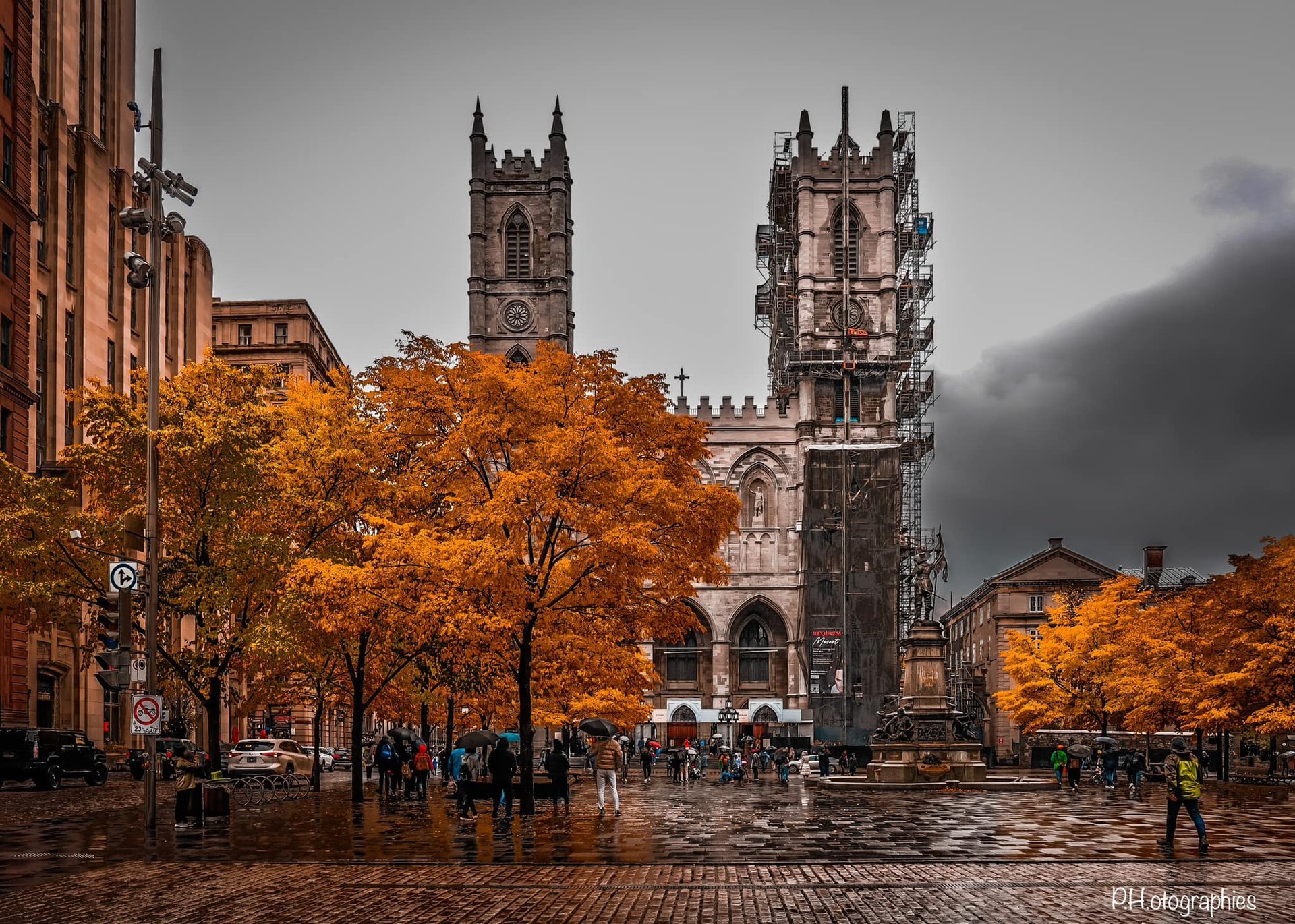
O'Donnell imagined a building in the neo-Gothic style, an architectural movement inspired by Europe’s great medieval cathedrals. This style is characterized by pointed arches, ribbed vaults, buttresses, and large windows decorated with colourful stained glass. The building is particularly notable for its two towers and its facade, richly decorated with religious sculptures.
A magnificent interior
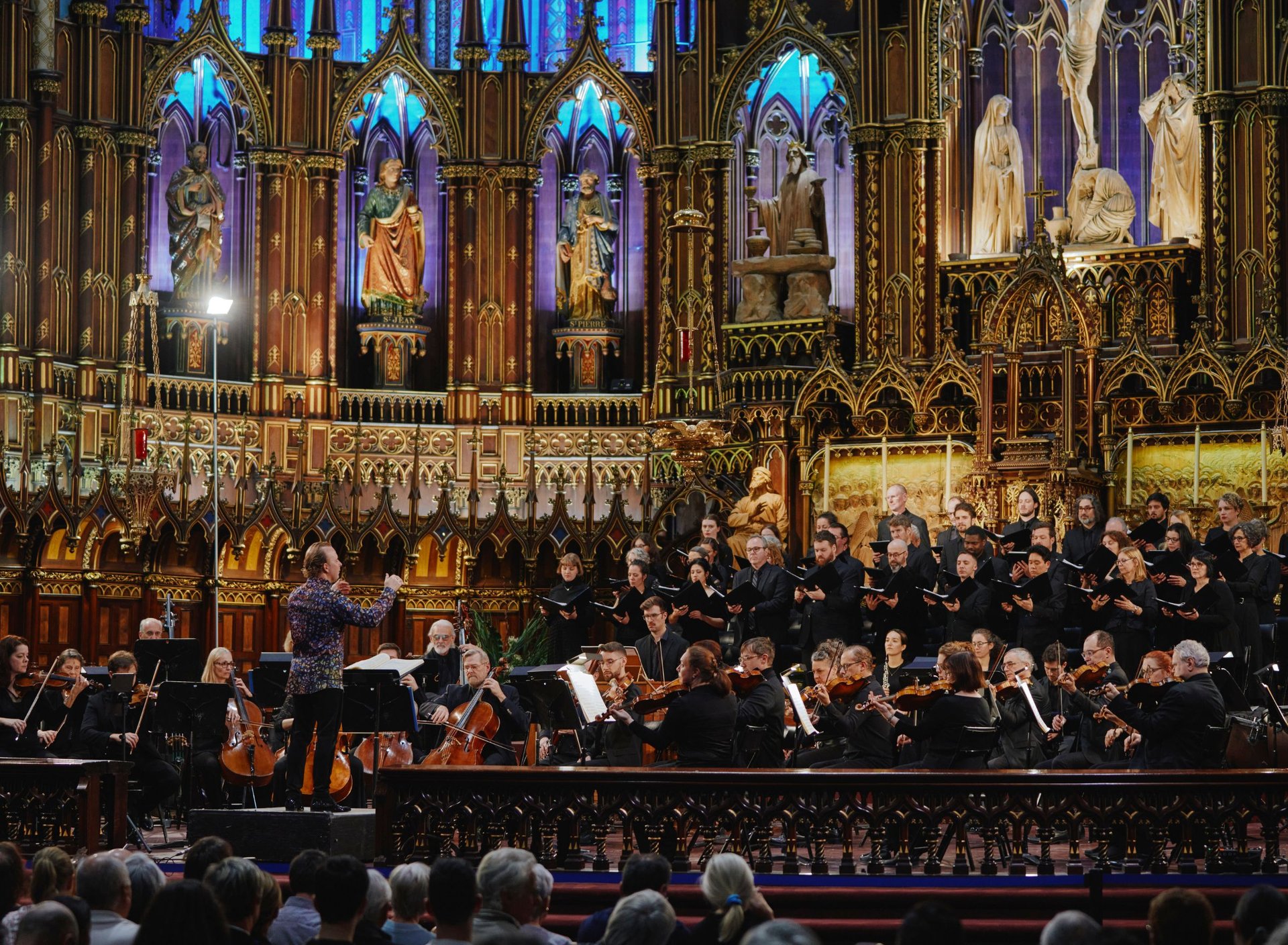
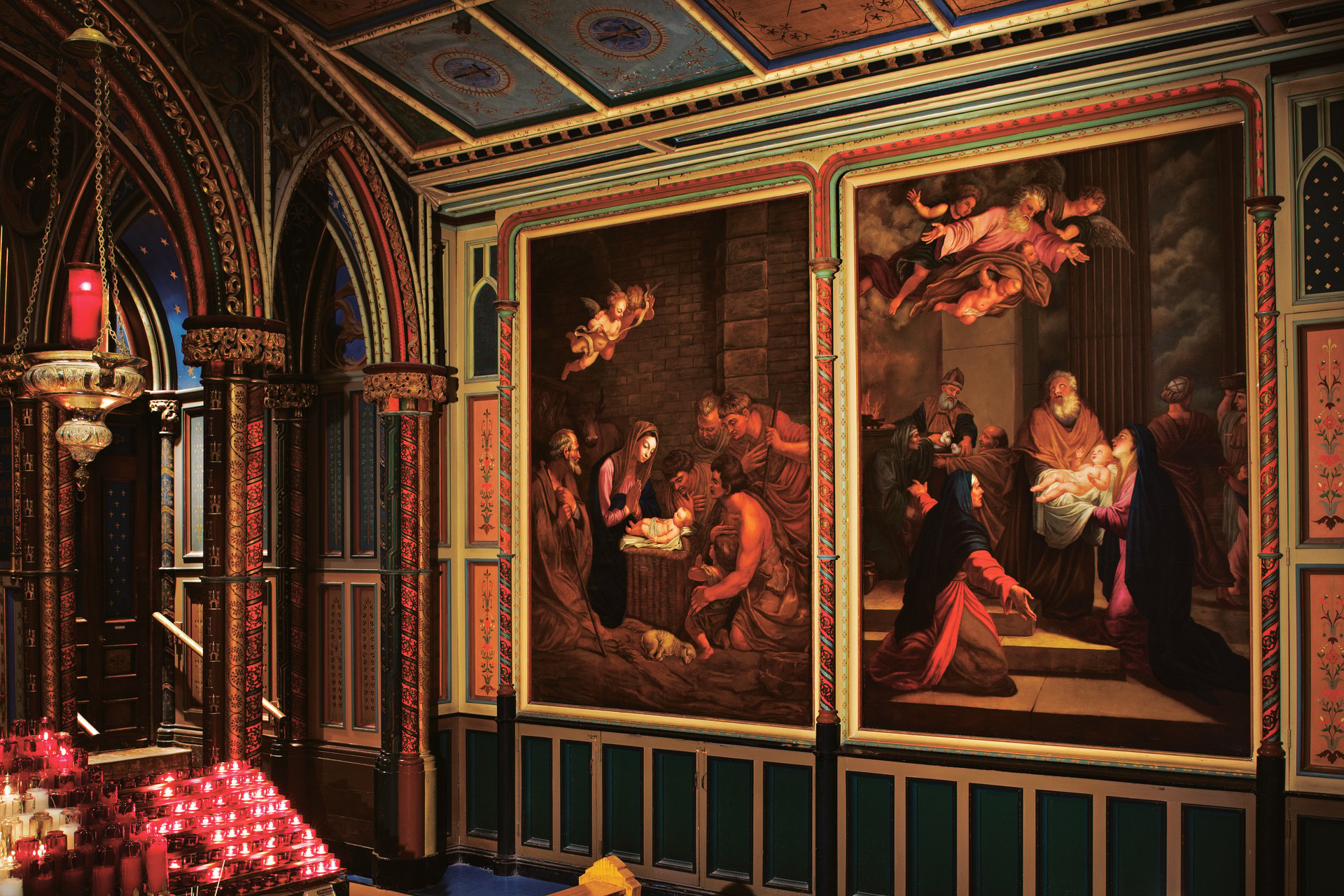
The interior offers a sumptuous style, the result of work carried out by architect Victor Bourgeau in the 1870s. The high altar, made of carved lime wood and over 20 metres high, is an exceptional centrepiece. The twisted columns, cherubs, and carved biblical scenes encourage meditation, while the expressive statues tell powerful spiritual stories. The numerous wood and stone sculptures, as well as the stained-glass windows assembled by the Lorin workshops in France, enrich this artistic space and further make the basilica a unique place.
Actions over two centuries
During the 19th and 20th centuries, the Basilica underwent several restorations aimed at both preserving its structure and meeting the needs of a growing community. At the end of the 19th century, work was undertaken to reinforce the roofs and restore the stained-glass windows. During the 20th century, the growing influx of tourists led to modifications aimed at improving the safety and accessibility of the site, while respecting the historic character of the monument.
The modern challenges of restoration work
Since the early 2000s, Notre Dame Basilica has faced major challenges related to wear and tear caused by the passage of time, pollution, and climate change. As a result, ambitious restoration projects have been launched in order to protect the building. This work includes restoring the limestone facades, meticulously cleaning and repairing the historic stained-glass windows, and modernizing technical installations, such as upgrading the heating system and adding LED lighting systems. Measures have also been taken to combat humidity, the main cause of wood and stone deterioration.
All restoration programs combine traditional expertise with modern technologies, such as 3D modeling, which is used to accurately diagnose structural weaknesses. These advances in technical tools help to better analyze and preserve the various elements that make up the entire building.
A living heritage, constantly adapting
Despite the restoration and preservation efforts, Notre-Dame Basilica is far from being a static historical monument. It remains an active place of worship, a major tourist attraction, a cultural centre open to all, and a powerful symbol of Montreal, Quebec, and Canadian identity. The management of maintenance work must strike a balance between heritage conservation and the needs of a space that remains relevant and dynamic as always. Indeed, projects are continually underway to enrich the cultural experiences of the site’s visitors.