Architectural guide

The Neo-Gothic style: a brief glossary of essential terms

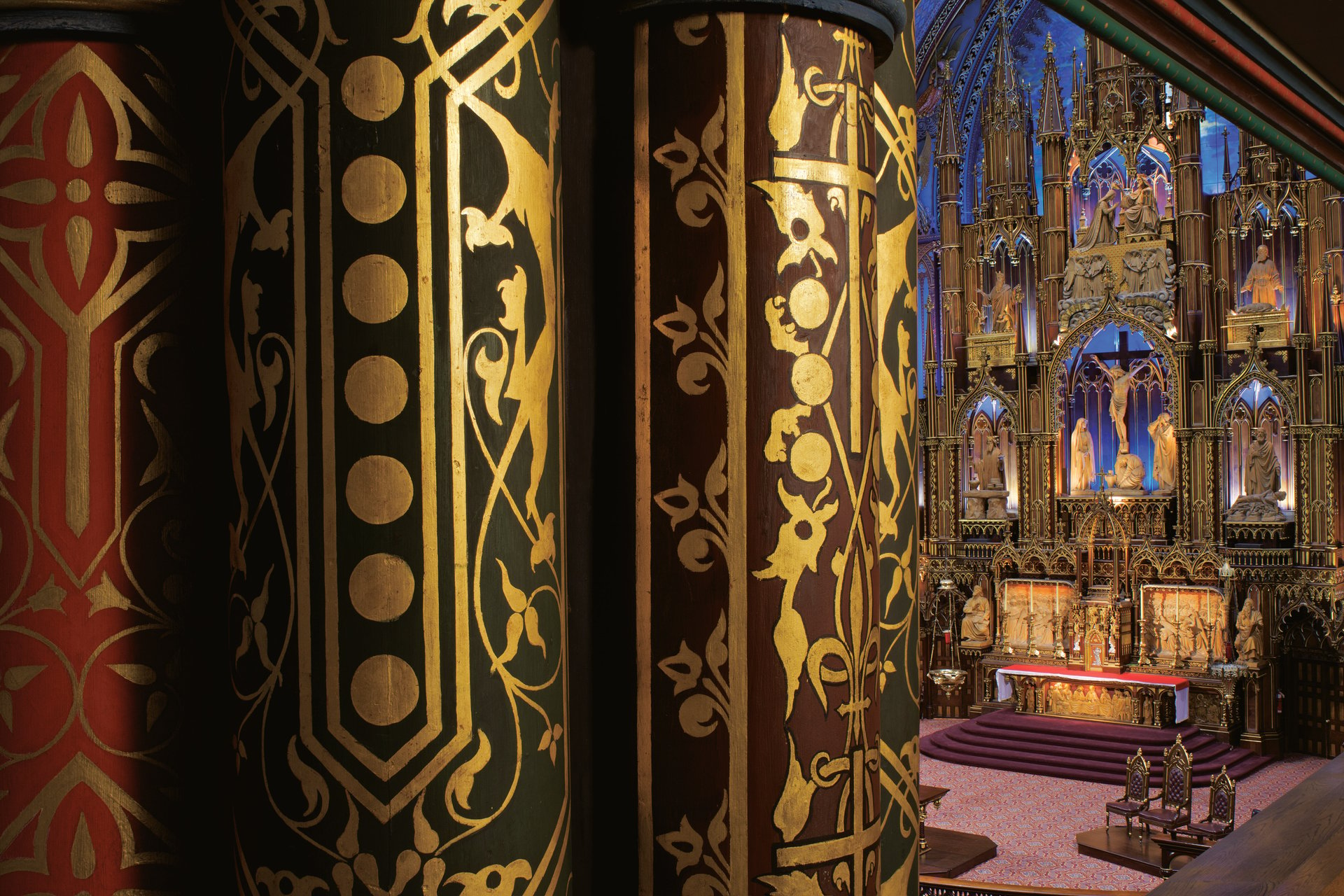
Here are 12 key terms that define both the stylistic and structurally functional elements of the Neo-Gothic approach, skillfully integrated into the engineering and architectural works that support Montreal’s Notre-Dame Basilica.
Published and updated on August 19, 20251 min read
The Neo-Gothic style: a brief glossary of essential terms
Normand Rajotte

Pointed arch 
The hallmark of Gothic architecture: two curved segments meet at a sharp point, creating a vertical thrust that reduces lateral pressure on the walls. 


Ribbed vault 
The intersection of two pointed arches forms a diamond-shaped ceiling that lightens the structure and allows for taller, brighter naves. 


Rib 
A raised edge molded in stone or brick, serving as the framework for ribbed vaults and guiding the distribution of weight toward the piers. 


Flying buttress 
An external stone brace that transfers the vault’s thrust to the buttresses. Without them, the walls would collapse outward. 


Buttress 
A vertical mass of masonry attached to the wall to reinforce its stability. Paired with flying buttresses, it embodies the “strength and grace” dynamic. 


Pinnacle 
A miniature spire adorning the top of buttresses. This decorative weight anchors the structure downward and draws the eye upward. 


Triforium 
A narrow gallery running above the main arcades. In Neo-Gothic style, it often appears as an openwork band following the interior wall. 


Clerestory 
The upper row of windows above the triforium. These windows flood the nave with light filtered through stained glass. 


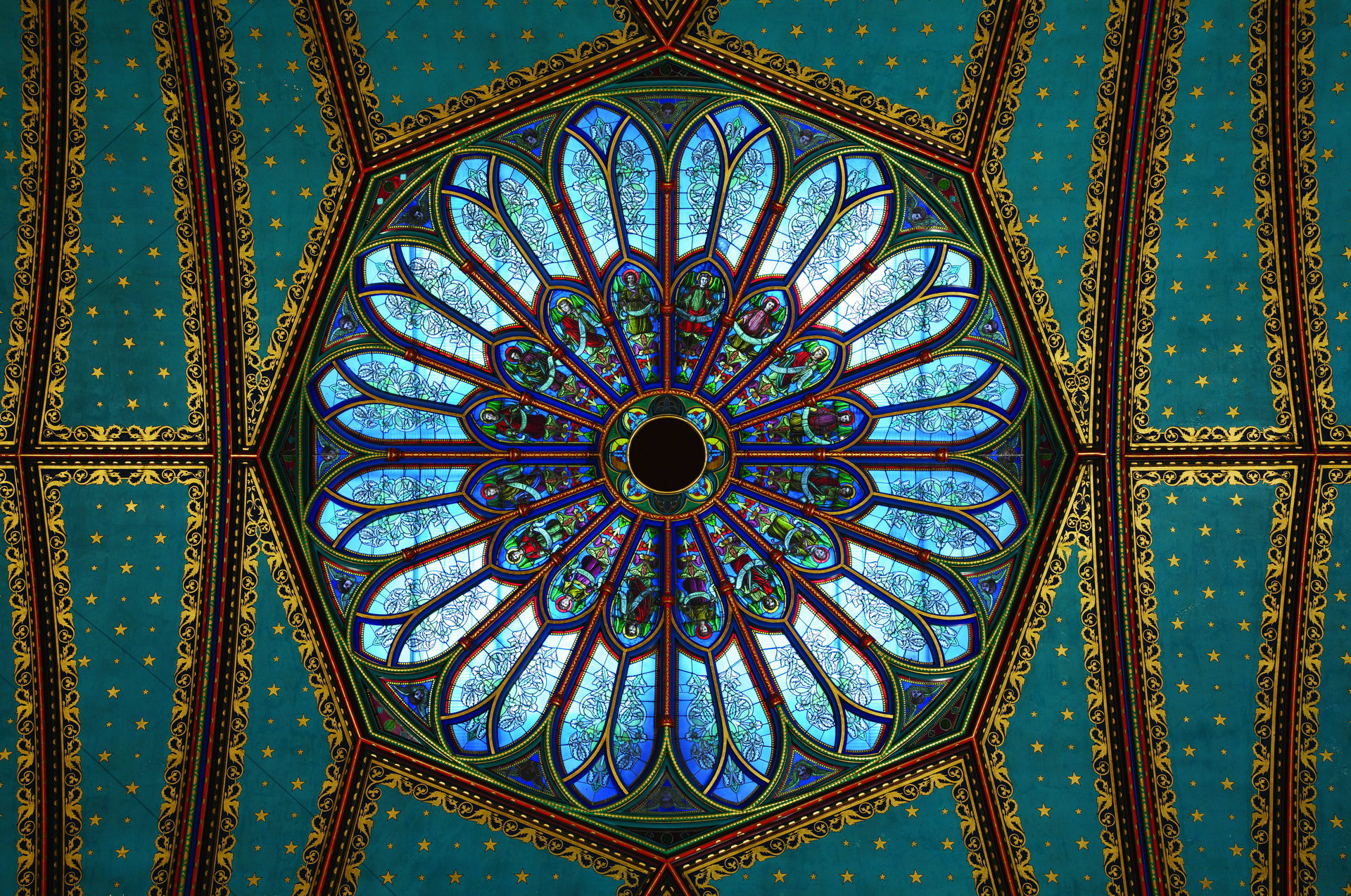
Rose window 
A circular stained-glass window with radiating patterns, typically set into a stone façade. Its installation is a feat of stereotomy: the art of cutting and assembling stone. 


Lancet 
A tall, narrow window ending in a point. Grouped in sets of three or five, lancets form the luminous partition of the facades. 


Crocket 
A small leafy ornament placed like a spike along the edges of pinnacles and arches. The carved stone subtly echoes natural vegetation. 
Other articles

The Blue of Notre Dame: Why This Colour Fascinates  

Celestial Blue 

The Blue of Notre Dame: Why This Colour Fascinates  

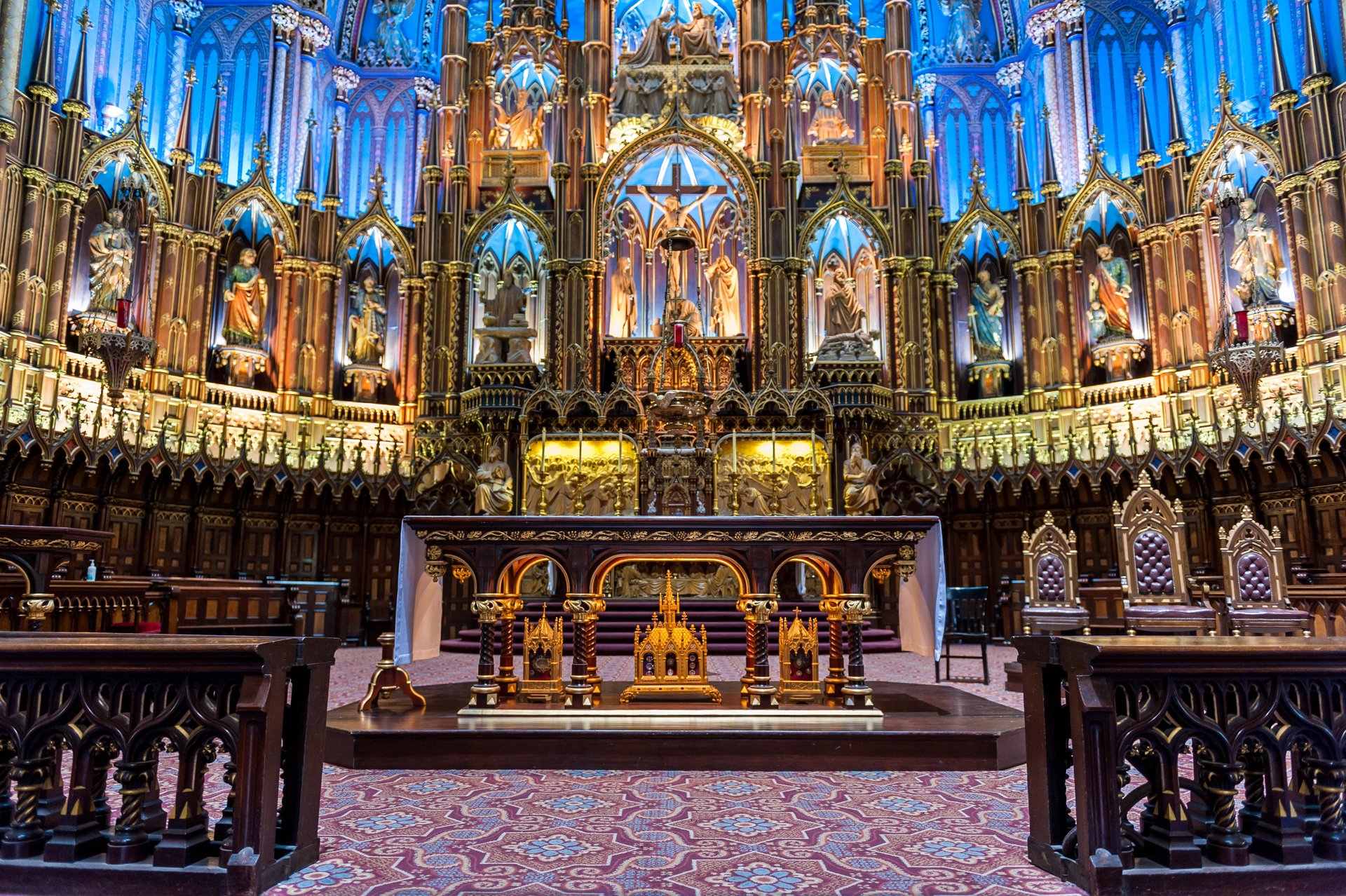
The deep blue covering the vaulted ceiling of Notre-Dame Basilica in Montreal is a visual signature that combines symbolism, pigment science, lighting prowess, and acoustic qualities. Let's explore the origin, composition, and purpose of this shade that has captivated worshippers and tourists alike for over a century. 

What the architecture of Montreal’s Notre-Dame Basilica owes to Paris

Originality and inspiration

What the architecture of Montreal’s Notre-Dame Basilica owes to Paris

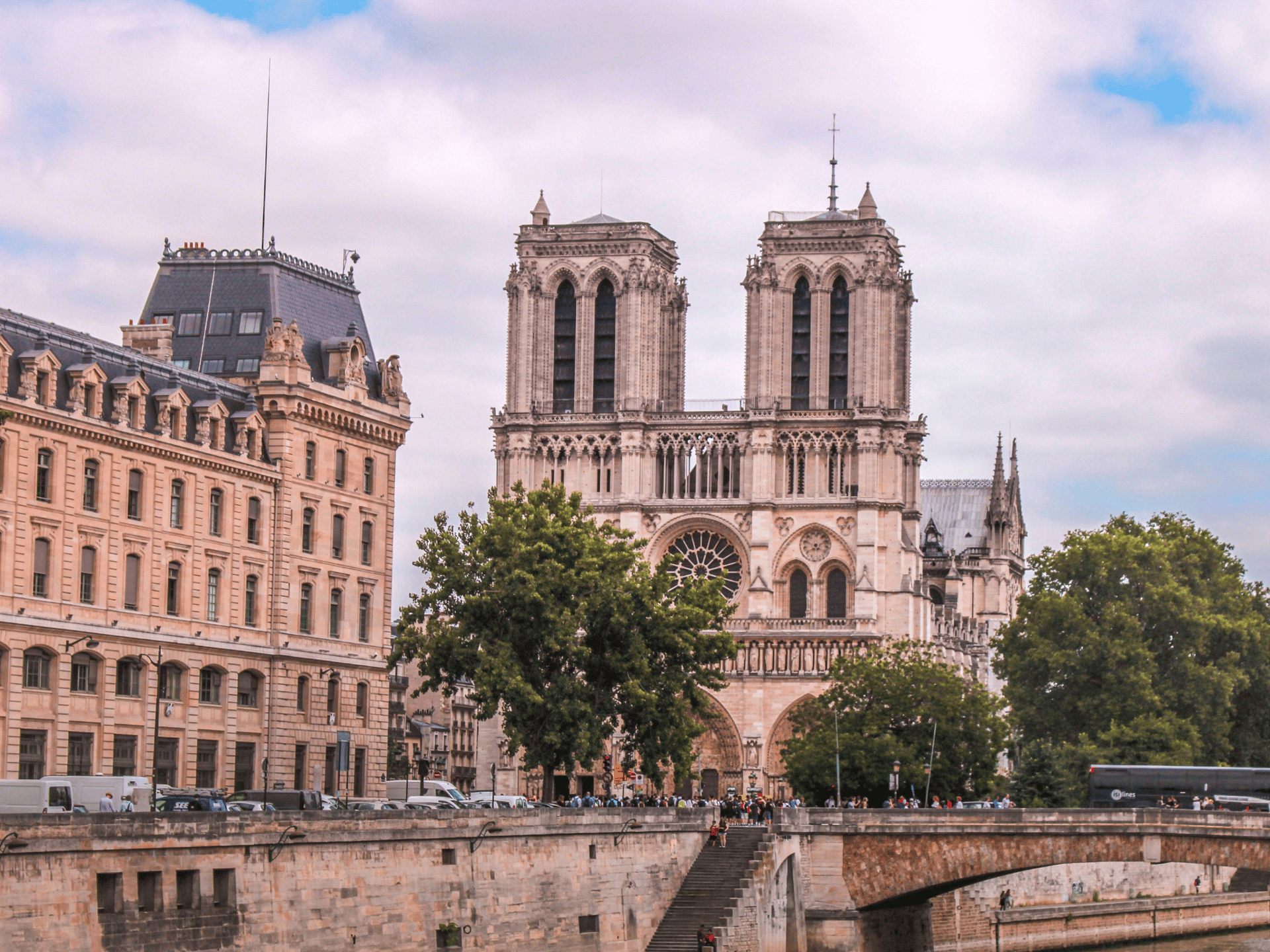
Due to certain characteristics, there may sometimes be confusion between the Notre-Dame of Montreal and Notre-Dame of Paris monuments: beyond their similar names, is the Montreal building partly a replica of its famous Parisian cousin?

Church, Basilica, Cathedral… Here are the Differences 

Quick Glossary 

Church, Basilica, Cathedral… Here are the Differences 

People sometimes refer to “Notre-Dame Cathedral of Montreal,” but this is incorrect. While the city does have a cathedral in its downtown area, and a cathedral can sometimes be a basilica, a parish can have a basilica even without a bishop. Let's clarify these commonly confused ecclesiastical titles! 

Notre Dame Basilica: 15 Key Dates in 200 Years of History 

Historical Timeline 

Notre Dame Basilica: 15 Key Dates in 200 Years of History 

From the start of its construction in 1824 to the AURA multimedia experience, Notre-Dame Basilica of Montreal has continuously reinvented itself. Let's go back in time through 15 chronological milestones: architectural landmarks, innovations, and both spiritual and public events that trace the evolution of one of Quebec's most visited monuments.