Craftsmen and Artists
From Stone to Stained Glass Windows and More: The (Almost) Forgotten Trades of Notre-Dame Basilica
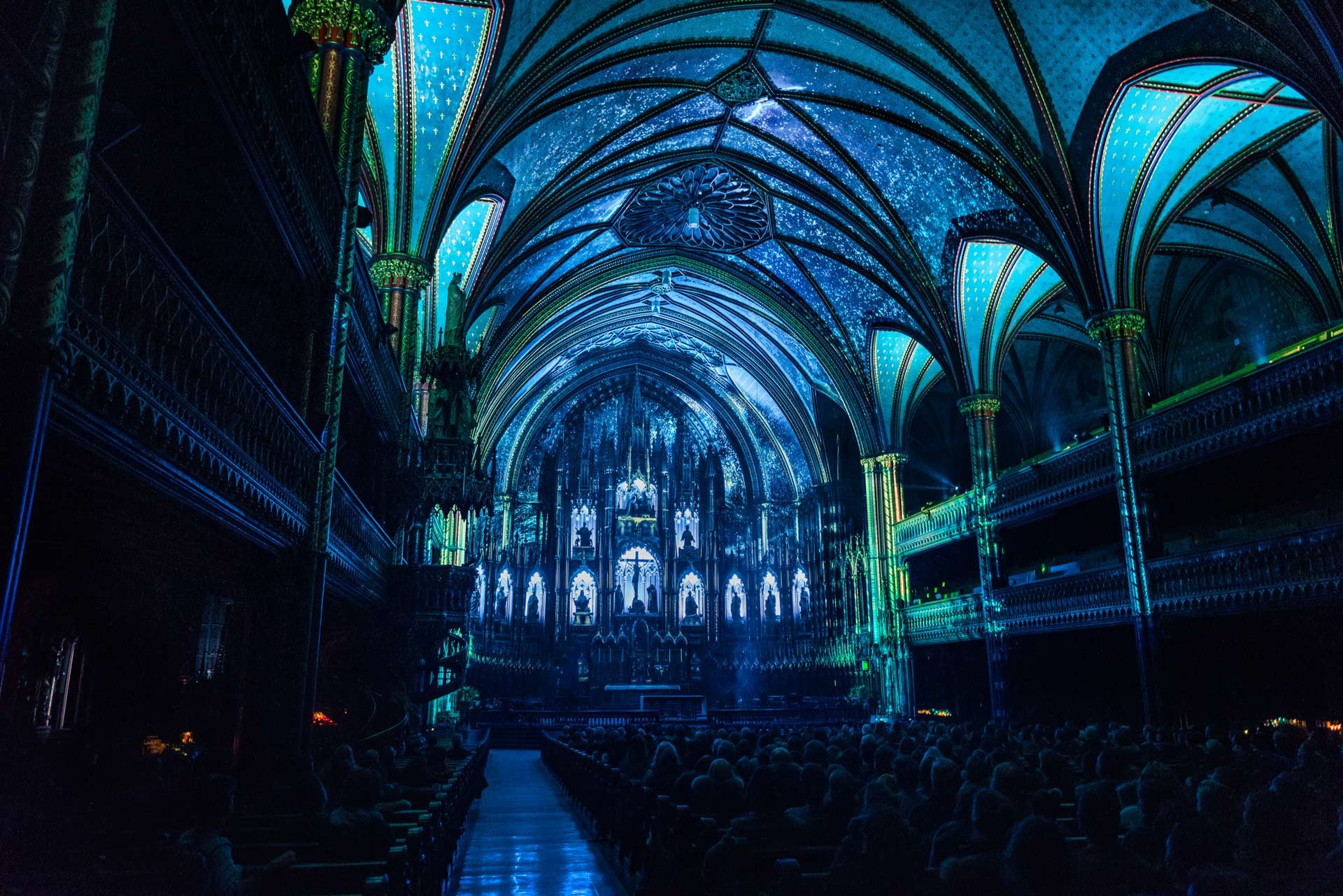
Beneath the midnight blue vaults of Notre-Dame Basilica of Montreal, visitors admire the sculptures and stained-glass windows, some even spare a thought for the hands that crafted them. Stone carvers, master glassmakers, wood carvers, gilders, decorative painters, organ builders... These trades, some of which are now threatened with extinction, built the soul of the basilica and continue to sustain its vast restoration efforts today.
Stone
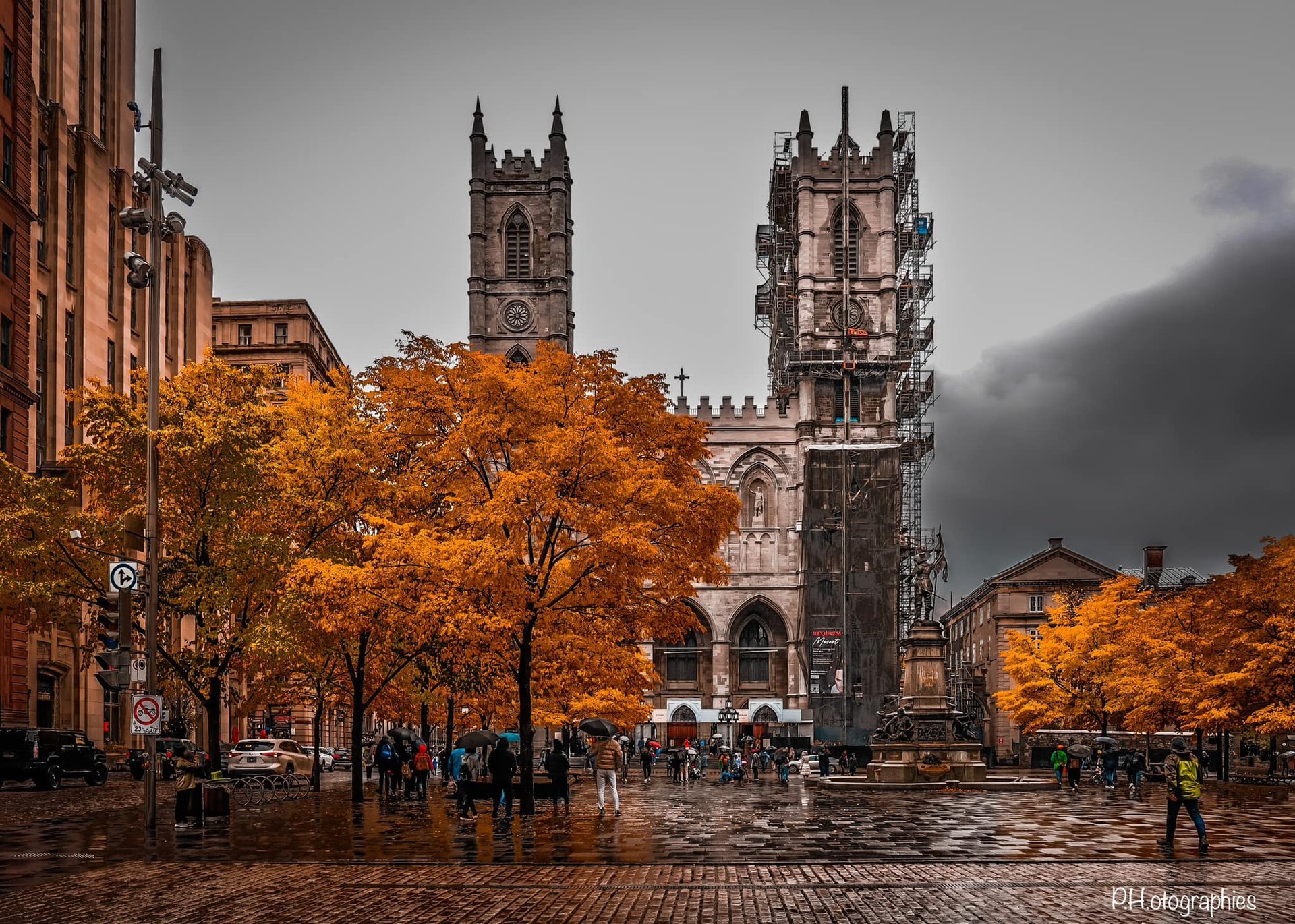
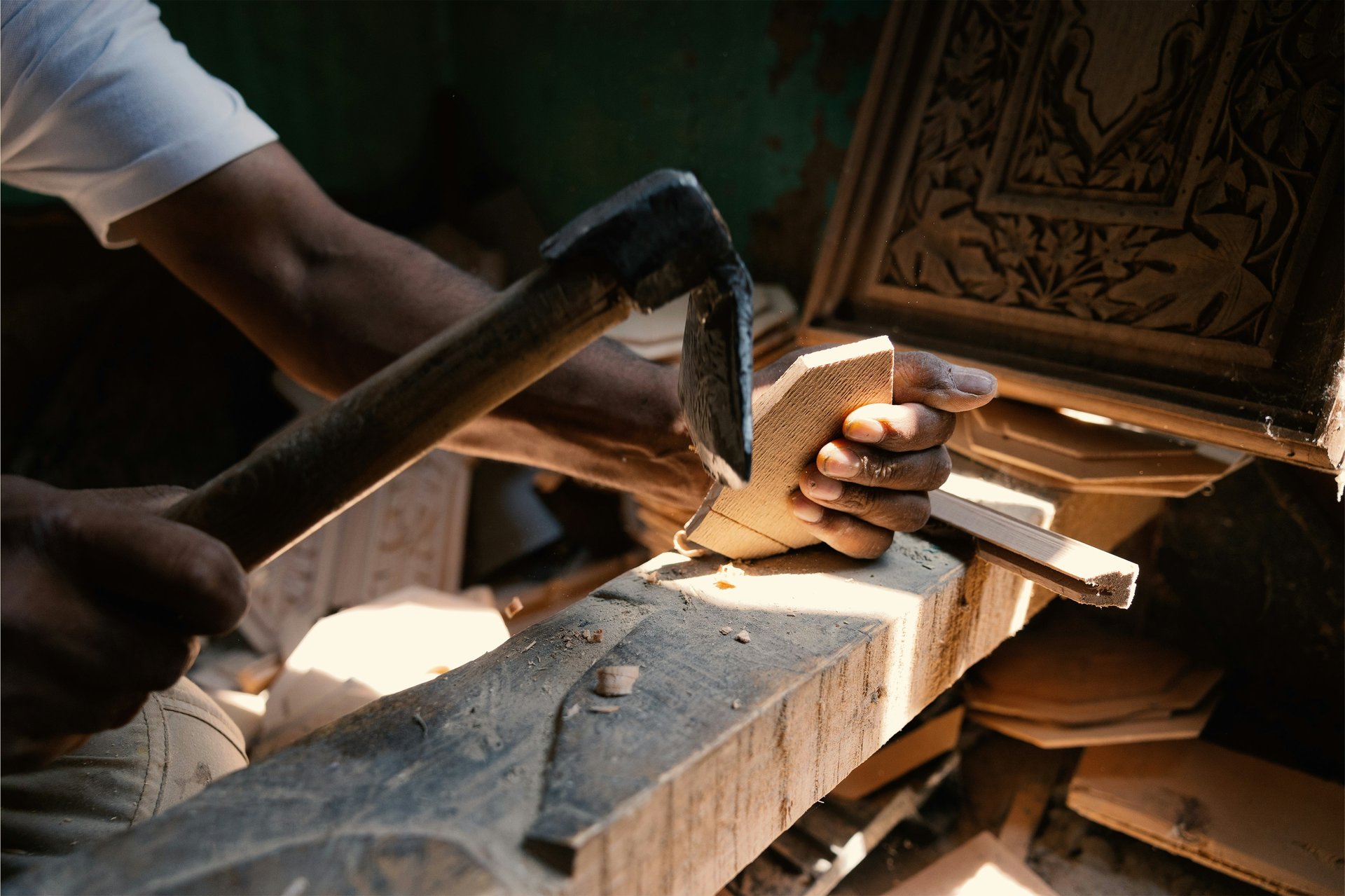
When architect James O’Donnell began construction in 1824, the grey limestone of Montreal echoed under the rhythmic blows of mallets. Four master stonemasons led entire teams, hand-carving the blocks that would form walls nearly 60 meters high. Two centuries later, restorers use the same type of stone, striving to match its shades perfectly to the original, thus preserving the artisanal craftsmanship that gave birth to the basilica.
Wood
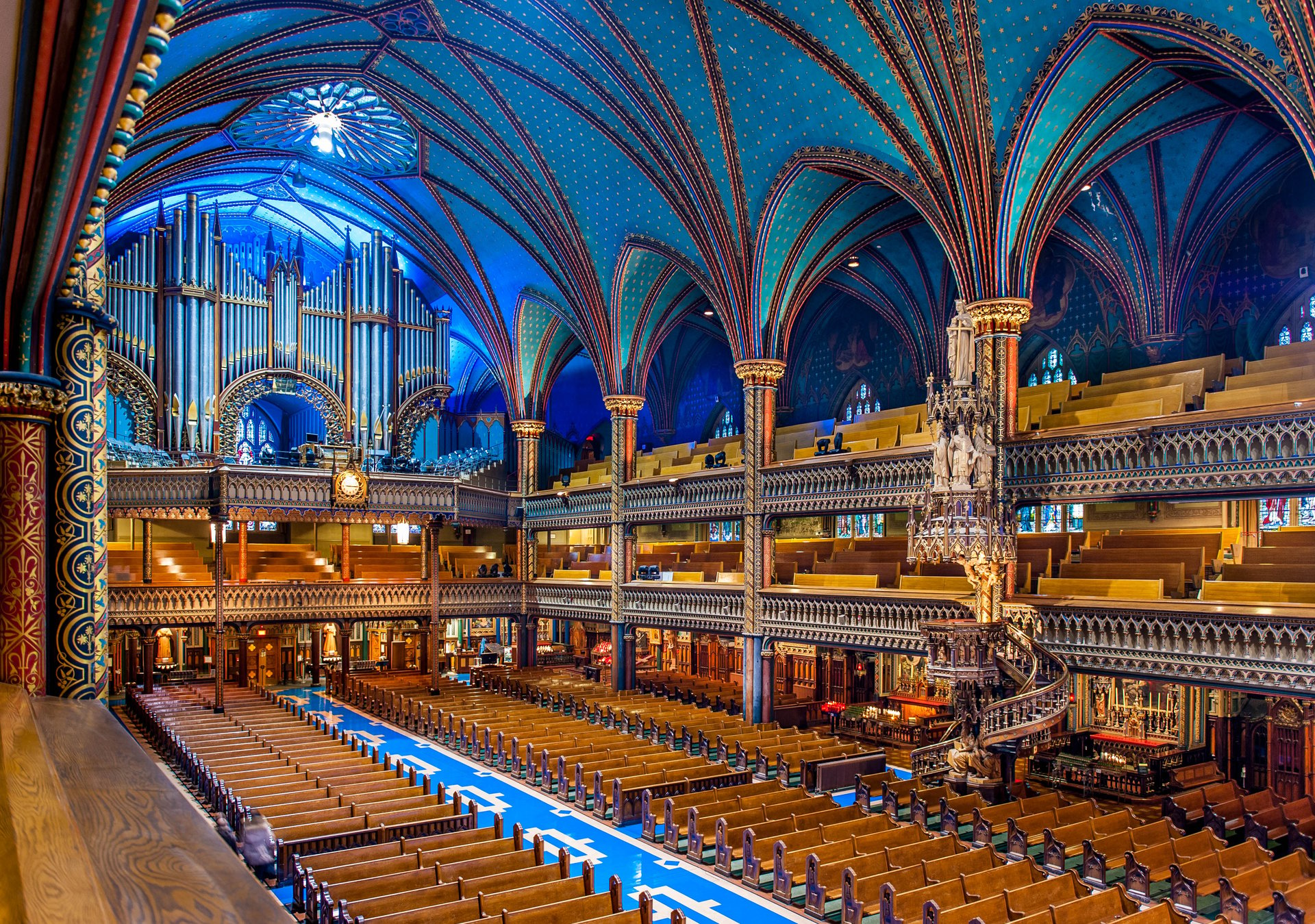
Inside, the work shifts from chisel to gouge. Between 1870 and 1885, architect Victor Bourgeau orchestrated a wave of carved wood: small columns, canopies, a monumental altarpiece, and more. Sculptor Louis-Philippe Hébert carved prophets and apostles from local linden wood, while decorative painters applied polychrome inspired by Sainte-Chapelle: deep blues, madder reds, golden foliage.
Glass
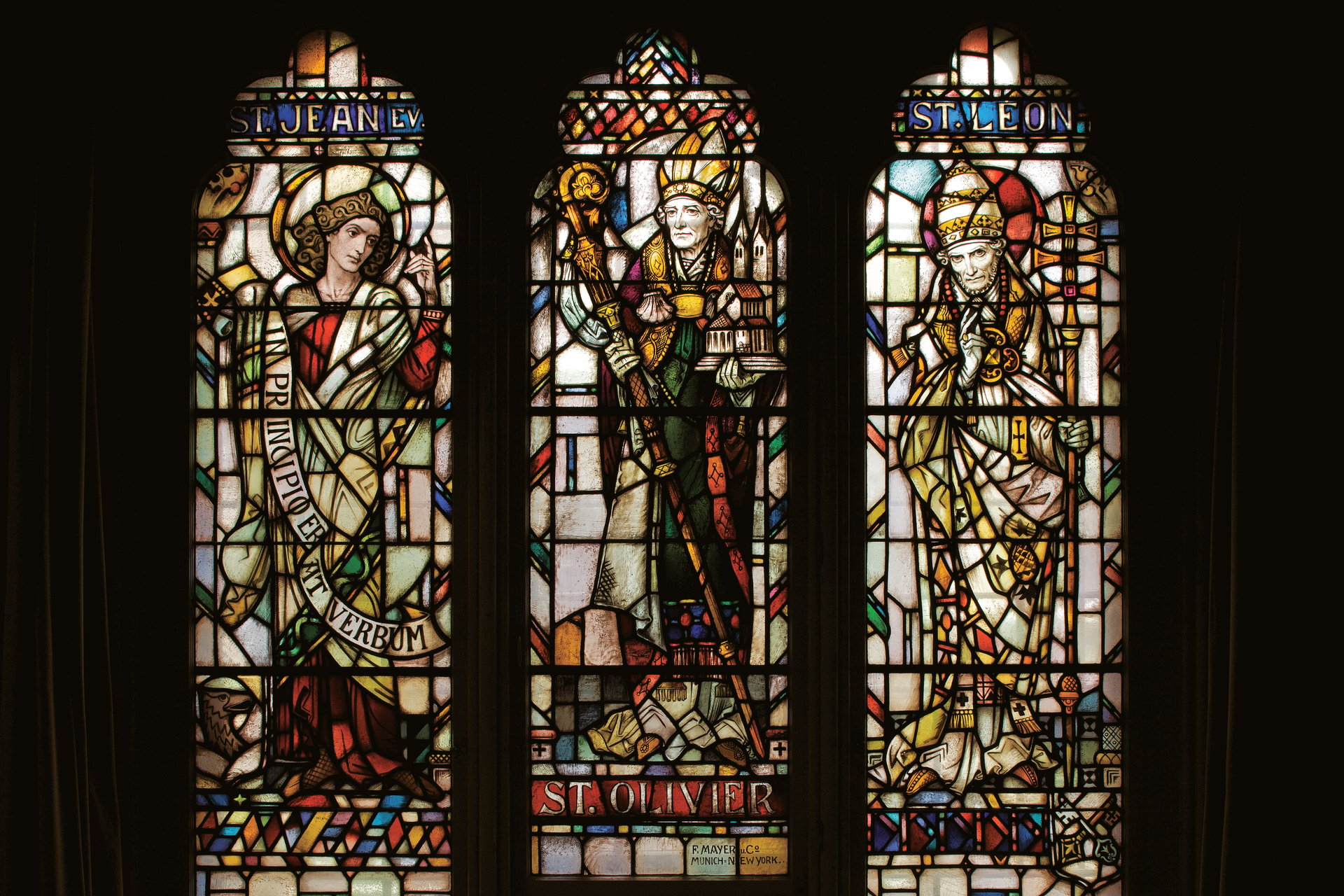
In 1929, marking the basilica’s centennial, glass replaced stone to tell the story of Ville-Marie. Father Olivier Maurault commissioned 22 stained-glass windows from the workshops of Francis Chigot in Limoges, France. Master glassmakers blew glass cylinders, cut them with heated iron, then painted highlights in grisaille before a final firing. Shipped by boat and train, the panels arrived numbered. The glaziers fitted them into lead frames under the choir’s light.
Colour
High above, the starry sky of the nave owes its brilliance not to LEDs or modern pigments, but to a synthetic ultramarine, blue formula introduced in 1859. Gilders applied 24,000 gold leaves to floral motifs and ribs, while painters dotted the vault to create the illusion of an infinite firmament. Every touch-up operation, like those completed in 1929 and 1991, requires the same fine brush and patience as in the 19th century.
Organ
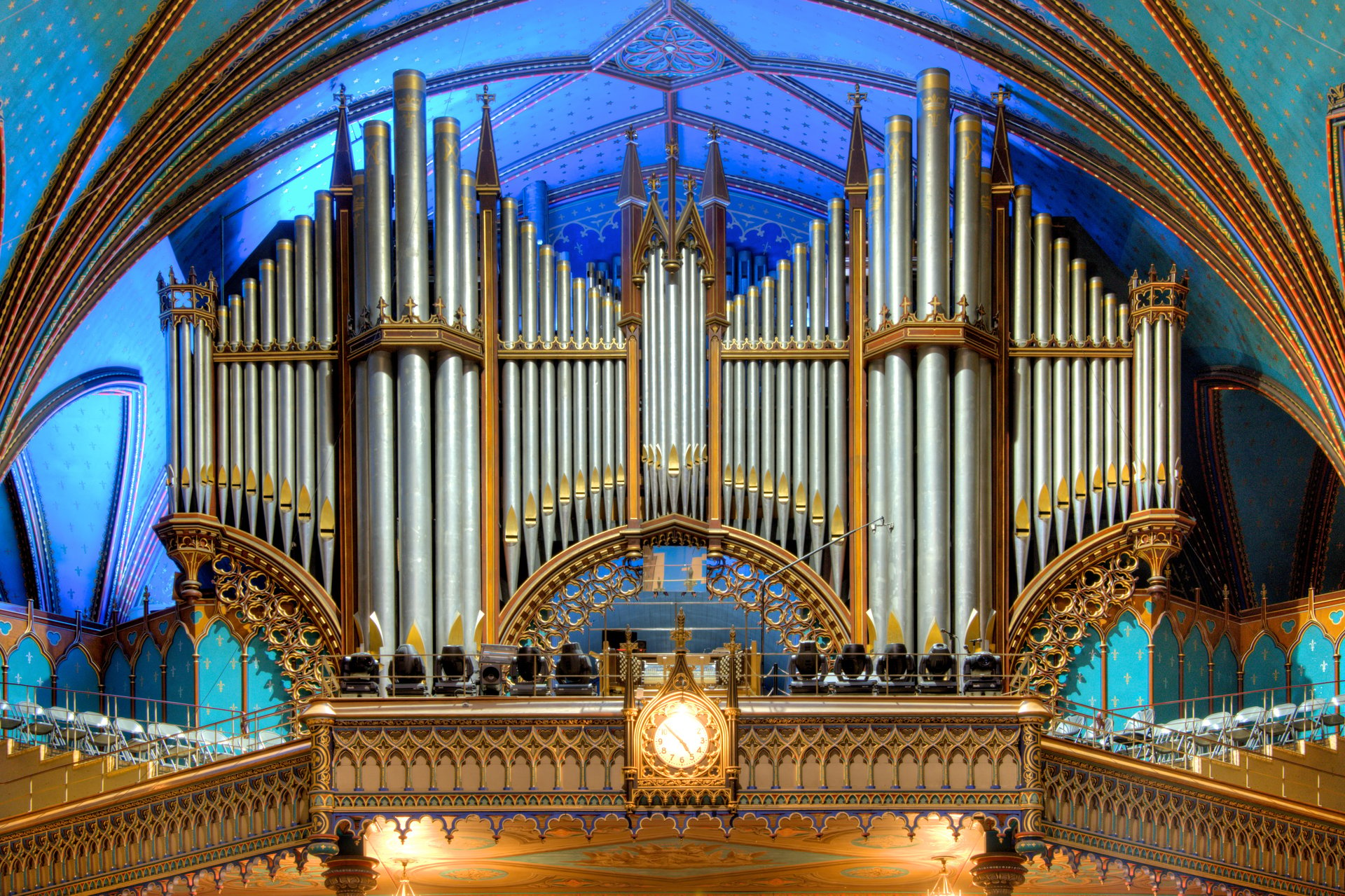
At the top of the gallery stands another giant: the Casavant organ, delivered in 1891, with its 7,000 pipes, 92 stops, and 4 keyboards. Assembled on-site by about 15 workers from Saint-Hyacinthe, the instrument still performs concerts today thanks to organ builders who return every year to retune reeds, flutes, and harmonics.
Ancient Trades Still Alive
These trades, though old, are far from folklore: they continue to fuel the basilica’s 2020–2040 restoration program, with an estimated budget of $50 million. The Notre-Dame Basilica Foundation funds internships for young stonemasons, commissions pigment analyses from the Université de Montréal, and entrusts stained-glass lead repairs to a fourth-generation family business. The construction has become a classroom: while visitors stroll through, artisans teach skills, gestures, and trade secrets, ensuring continuity.
Preserving Notre-Dame Basilica of Montreal also means preserving an archipelago of rare skills. In the silence of the building, one can almost hear the chisel on stone, the scraper on wood, the flame warming the glass, a quiet symphony where each note recalls the beat of an old hammer. These echoes of the workshop form the true treasure of the monument: a legacy of human skills as precious as its towers or stained glass. As long as these hands can express themselves through their craft and art, the basilica will remain a living bridge between past and future.